
Buying shed antlers online? Start by confirming the species, exact quantity, size, condition, and whether each piece is naturally shed. Request photographs of the actual item—not a representative specimen—then verify any matched-pair claims, ask about legal origin, and agree on the full delivered cost and payment terms before sending money. Compare similar specimens, not just their asking prices.
Publisher's note: The Antler Field Guide is published by AntlerSheds.com, a marketplace for antlers. We recommend browsing our own marketplace while also explaining what to examine, what to ask, and when to walk away from a purchase. The marketplace does not itself establish the value or legal provenance of every listing.
01 / Choose Antlers for the Job
Before shopping, decide whether you're buying an antler to display, collect, carve, or use as craft material. An attractive specimen isn't automatically the right one for your project. An intact brown shed with long tines might be ideal above a cabin fireplace; a craftsperson may prefer a shorter, solid piece with plenty of usable beam.
Cabins & décor
Consider color, complete tips, symmetry, overall size, and whether you'll need one shed or a pair. Compare dimensions against the actual display space.
Collections & trophies
Check species, condition, unusual points, claimed matching history, and honest measurements. Ask for provenance when it's material to the price.
Carving & materials
Focus on sound sections, beam diameter, available length, cracks and repairs. Minor cosmetic chewing may be acceptable for some projects.
Buying for a dog? Very hard chews, including antlers, can damage teeth. Veterinary dental guidance describes the fracture risk; ask your veterinarian about safer chew options rather than assuming every antler is appropriate for a pet.
02 / Elk, Deer, Moose & Caribou: Know Your Species
Species changes shape, typical scale, display requirements and how sellers describe the item. Photos and measurements matter more than broad labels such as “big deer shed.”
| Species | What to examine | Shop |
|---|---|---|
| Elk | Sweeping beam, large tines, full width and weight; measure before choosing a display spot. | Elk listings ↗ |
| Whitetail | Main beam with individual upward points; verify tine count and overall length. | Whitetail ↗ |
| Mule deer | Common forked branching; inspect every branch for damage and repaired points. | Mule deer ↗ |
| Moose | Broad palmation on many mature antlers; confirm packed width and freight costs. | Moose ↗ |
| Caribou | Variable branching and flattening; ask for photographs from both sides. | Caribou ↗ |
Not certain what species the seller photographed? Use How to Identify Shed Antlers and request a clear view of the base and branching pattern.
03 / Inspect Brown, Hard White & Chalk Antlers
Buyers often see the words brown, hard white and chalk. They are useful broad descriptions, but not universal industry certifications. A naturally faded antler can still be solid; a brown-looking one can have deep cracks or a broken tine. Grading criteria vary by buyer and seller.
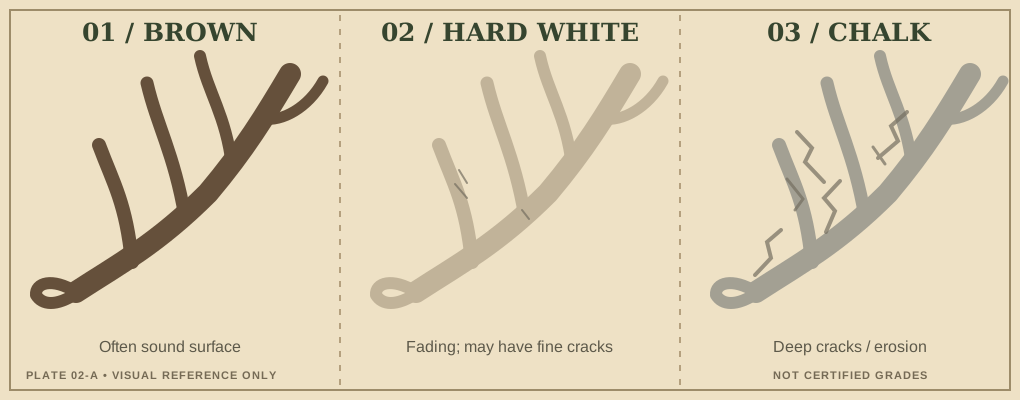
Often prized for its appearance. Look closely for cracks, chewed tips, glued repairs and mismatched color around broken points.
Faded or sun-bleached but potentially sound. Request close-ups of surface cracking and weak areas if using it for crafts.
Heavily weathered, rough or deteriorating. Confirm whether the surface is friable and whether the material suits your use.
Tex Creek Antler notes that grading can depend on cracking, not just color. If a listing says “Grade A,” ask the seller to describe the actual physical condition and what that grade means to them. Our Antler Grades Guide explains the terminology.
04 / Seven Photographs to Request Before Buying
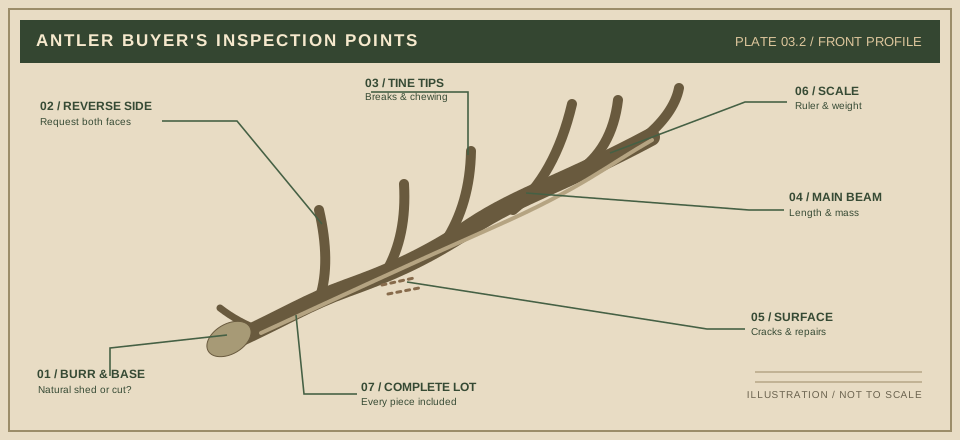
A listing with just one attractive image may hide important details. Ask the seller for recent, unedited-in-substance photographs showing the actual antler for sale. A note with a current date or a specific requested angle can help establish the seller has access to that specimen, though no photo proves authenticity on its own.
- Whole specimen: full beam and all tines in one view.
- Reverse side: the opposite surface, including hidden damage.
- Burr and base: close-up of the natural shedding surface or cut/skull attachment.
- Tine tips: show point damage, repairs, or gnaw marks.
- Scale: measuring tape or ruler beside the specimen.
- Known defects: close-ups of cracks, chalk, glue, or breaks.
- Entire lot: both antlers together for a pair, or every item in a bulk lot.
“Could you send one photo showing the entire shed next to a tape measure, plus close-ups of the burr and any cracks or broken points? Please confirm the length, weight, and whether shipping is included.”
For more angles and examples, see our seven-view antler photography reference. The Federal Trade Commission also advises checking images of the actual item when buying online.
05 / Single Sheds, Matched Pairs & Bulk Lots
A single shed can work well for a display or a one-off carving project; confirm which side is offered and whether any pictured companion antler is excluded. A matched pair is generally understood to be two shed sides from the same animal. Similar color and shape alone do not prove that claim. Ask whether matching is documented, believed, or simply a decorative pairing.
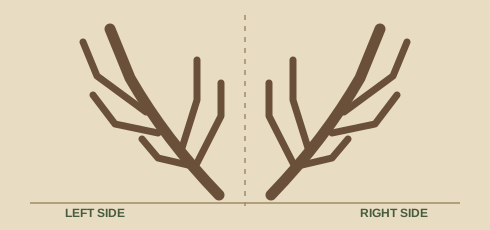
Photograph each side separately and together. Ask for measurements of both, condition notes for each, and what evidence supports a “matched” description. The price premium—if any—is specimen-specific.
Bulk lots require a different kind of check: exact piece count, species mix, total weight, whether every antler in the photo is included, how grades were assigned, and whether pickup or freight is expected. A lot described as “50 pounds of antlers” is not enough information to judge its suitability for a specific craft or display.
06 / How Much Should You Pay for Shed Antlers?
Check comparable specimens by species, size, grade, quantity and condition. The seller's asking price is not the same as a completed sale, and a bulk dealer's buying price is not a fair retail estimate for every trophy-quality specimen. Ask how much of the listed value comes from a confirmed measurement, unusual character or matched-pair claim.
Often based on pounds and grade, with strict acceptance rules.
Useful for comparisons, but not evidence the item sold.
Useful when verifiable and genuinely comparable.
Our general price reference explains the major valuation factors, while How Much Are Elk Antlers Worth? includes documented elk buyer quotations and worked examples. Use both as context rather than treating a single number as a universal market rate.
07 / Compare the Total Delivered Price
Two apparently similar listings may cost very different amounts once packing, freight, tax and other fees are considered. Enter each seller's quoted costs below. The tool compares the total you would pay; it does not score antler quality or guarantee that the cheaper listing is better.
08 / Shipping: The Price You Don't See in the Listing
Elk and moose sheds are awkward to package. Length, width, height, total weight and protruding tips can make shipping more costly than buyers expect. USPS publishes parcel-size and oversized standards; private carriers can also apply dimensional-weight or special-handling charges.
Ask for the packed dimensions and a written shipping quotation to your postal code. Confirm who pays for packing, whether the seller will protect every point, what tracking will be provided, and whether any declared-value coverage applies. Don't assume “shipping available” means that the displayed asking price includes freight.
Get the full delivered amount in writing: item price + packaging + shipping + applicable taxes or fees. For large or valuable antlers, ask about a carrier that can actually accept the packed dimensions.
See How to Ship Antlers Safely for packaging examples and considerations.
09 / Buy More Safely: Sellers, Payments & Fraud
AntlerSheds helps buyers discover listings and communicate with sellers; it does not mean every private transaction carries automatic escrow, dispute protection or refund guarantees. Before purchasing, check the seller's information and history where available, request current photographs, and confirm the item's description and return terms in writing.
When buying from someone you do not know, favor a payment method that provides appropriate protection for this specific purchase. The FTC recommends safer methods such as qualifying credit-card payments, and warns about requests for gift cards, wire transfers or cryptocurrency. Payment-app protections vary; verify eligibility before paying.
Keep copies of listing screenshots, messages, invoices and shipping details. If a seller will not answer basic questions about the antlers, refuses reasonable photos, or pressures you to pay immediately, you can simply choose a different listing. No marketplace can eliminate all fraud risk.
For additional consumer advice, consult the Federal Trade Commission's online-marketplace guidance.
10 / How to Buy Antlers on AntlerSheds.com
AntlerSheds is a dedicated antler marketplace. You can browse without an account; to message sellers, the published buyer process says you should create a free account. Sellers and buyers then agree on payment and delivery arrangements. Listing descriptions and available contact options can differ.
- Browse by species.Open all antlers for sale or a deer, elk, moose or caribou category.
- Inspect the listing.Check actual photographs, asking price, exact item quantity, and seller description.
- Create an account to contact the seller.Use AntlerSheds' messaging feature and keep your questions in writing.
- Ask for any missing details.Confirm species, grade, dimensions, defects, matching claims and lawful origin.
- Agree on delivery and payment.Confirm the full price, seller's return terms, safer payment method, and shipping timetable.
- Save records and track delivery.Retain the original listing, agreement, payment confirmation and any tracking information.
No listing fee or commission charged by AntlerSheds to use the marketplace; shipping and third-party payment expenses, where applicable, are separate. Review each seller's actual terms. AntlerSheds.com publishes this Field Guide.
11 / Are the Antlers Legal to Buy and Receive?
Collection, possession, sale and shipment are separate legal questions. Regulations can depend on species, state, the original land and whether an antler was naturally shed, taken with a legally harvested animal or found attached to a skull. A listing being visible online does not establish lawful origin.
Ask the seller how the antlers were acquired and whether any permits, tags, permission or transfer documents are applicable. When an item crosses state lines, also consider federal wildlife-trade rules, including the Lacey Act's prohibition on interstate trade involving certain unlawfully obtained wildlife. For a practical starting point, see Is It Legal to Sell Shed Antlers?. Laws may change; confirm specifics with the relevant agency.
12 / Ten Common Mistakes Antler Buyers Make
A better approach is to slow down and ask the seller for a complete picture of the specimen and the transaction. A good listing should make it easier to understand what you're buying, not merely persuade you to buy quickly.
13 / Pre-Purchase Field Checklist
Mark each item after confirming it with the seller. You can print this page for a field-manual-style record; these checkmarks are kept only in your current browser session.
14 / Questions Buyers Ask About Shed Antlers
Where is a good place to buy shed antlers online?
Start with a dedicated antler marketplace such as AntlerSheds, where listings are organized around antlers. Compare the actual seller, photos, terms and delivered cost no matter which marketplace you choose.
How much should I pay for an elk shed?
It depends on weight, grade, size, appearance and whether it is a single shed or a matched set. Our elk-specific value guide distinguishes dealer quotations from retail asking prices and completed sales.
Are brown antlers better than white antlers?
Brown color is often desirable for display, but solid hard-white antlers can also be useful. Condition, cracking, structural integrity and your planned use matter more than color alone.
How do I know an antler is naturally shed?
Request a close-up of the burr and shedding surface. An antler attached to a skull plate or deliberately cut from a skull is a different item, with potentially different legal and pricing considerations.
Are matched antlers worth more?
Some matched pairs interest collectors and decorators more than separate sheds. There is no universal premium; verify how the seller knows both sides came from the same animal.
What should I ask an antler seller?
Ask for current photos, species, exact quantity, measurements, defects, matched status where relevant, total shipping cost, payment method, and any return conditions.
How can I avoid scams?
Review the seller's information, check actual photos, get the agreement in writing, and use an eligible payment method with buyer protections. Walk away from requests for high-risk irreversible payments or unusual pressure.
Can I buy shed antlers from another state?
Often, but rules depend on the species, lawful origin, buyer's state, and transportation requirements. Verify applicable wildlife rules for the particular item before paying.
Sources & Research Notes
Reviewed November 20, 2026. This reference is general buying guidance, not a warranty, an appraisal, legal advice or a guarantee of seller performance. Fees and marketplace features can change. For transactions, review the current seller listing, marketplace policies and the applicable payment provider's protection terms.
- AntlerSheds.com — How It Works: browsing, accounts, contacting sellers, and buyer/seller-arranged payment and delivery.
- Federal Trade Commission — Buying From an Online Marketplace: seller verification, real-item photos, payment methods and dispute considerations.
- Tex Creek Antler — Grading: commercially used antler grading terminology and varying condition standards.
- United States Postal Service — Parcel Size, Weight & Fee Standards: size and oversized shipment rules.
- U.S. Fish and Wildlife Service — Lacey Act commerce discussion: interstate trade involving wildlife products unlawfully obtained under applicable law.
- VCA Animal Hospitals — Fractured Teeth in Dogs: why antlers and other hard chews can pose dental risks.
READY TO FIND THE RIGHT SET?
Browse antlers by species, inspect the details, and contact sellers directly through AntlerSheds.com.
SHOP SHED ANTLERS ↗Field Guide published by AntlerSheds.com · Free browsing; confirm each seller's terms.